Let the light change life

Metal halide perovskite has excellent photoelectric performance, and has become a well-deserved "star" material in the semiconductor field, and has attracted great attention from academia and industry. With the investment of a lot of research, the application of perovskite covers various fields such as single photon source, micro-nano laser, photodetector, optical logic gate, optical logic gates, optical communication, waveguide, nonlinear optics and other optical and optoelectronic fields. Therefore, the construction and integration of photonic devices with different functions based on a single perovskite chip is very promising. The development of micro-nano processing technology is a key step in integrating various optoelectronic devices into a single chip to meet the requirements of advanced integrated optics, and will play a key role in the development of the next generation of information technology. The laser direct writing (DLW) is an efficient, non-contact and mask-free micro-nano processing technology. It couples the laser beam with the microscope to reduce the size of the output spot and achieve high-resolution micro-nano processing. Depending on the manufacturing mechanism and the threshold response of the material, the DLW optimal resolution is usually between a few and several hundred nanometers. At the same time, DLW can flexibly manufacture any micro-nano structures on the same substrate, or it can use the spatial light modulator to change the focused laser field into a specific shape or produce multiple foci simultaneously, so as to meet the needs of large-scale manufacturing. Mechanism of the interaction between laser light and perovskite With the unique advantages of high precision, no contact, easy operation and no mask, laser is an excellent tool for the operation, fabrication and processing of micro-nano structures on semiconductors. The specific interaction mechanism between laser and perovskite can be divided into various phenomena, such as laser ablation, laser-induced crystallization, laser-induced ion migration, laser-induced phase separation, laser-induced light reaction and other laser-induced transitions. These different mechanisms of action represent different changes in perovskite crystals. For example, laser induced crystallization process is the nucleation and crystallization process of perovskite precursor, and laser induced phase separation is the separation of mixed phase perovskite into two different phases, both of which contain rich physical phenomena. The implementation of the whole micro-nano processing process is affected by the DLW parameters, such as wavelength, pulse / continuous wave, action time, power, and repetition rate. The selection of these parameters provides a flexible and powerful tool to precisely control the micro-nano structure of perovskite. Photoelectric applications of perovskite fabricated by DLW Perovskite materials processed by DLW are widely used in solar cells, light-emitting diodes, photodetectors, lasers and planar lenses, showing more excellent performance. At the same time, due to the unique ionic characteristics of perovskite, its ion migration, phase separation, photochromic and other phenomena appear under the action of continuous laser, thus expanding its application in the fields of multi-color display, optical information encryption and storage. Challenges and prospects Compared to conventional semiconductor manufacturing technologies, DLW technology has greatly improved manufacturing efficiency due to its simple operation process and high-throughput characteristics, and is expected to manufacture complex high-resolution micro-nano structures at a large scale. The cheaper and flexible and controllable laser combined with the superior photoelectric performance of perovskite semiconductor will bring great potential for the preparation of micro-nano structure perovskite optoelectronic devices. Relevant research is still in its infancy, and some key technical bottlenecks need to be addressed. It is expected that in the near future, when these bottlenecks are broken through, the related basic research and industry will usher in great progress.
Read More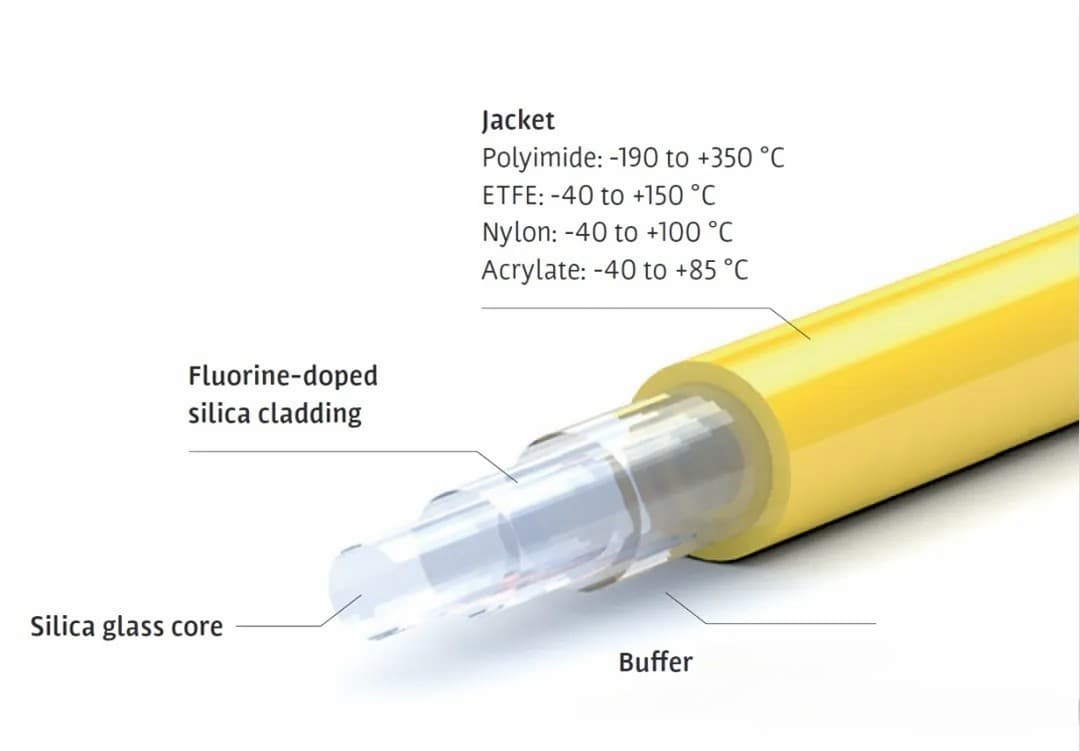
It is well known that the optical fiber in the general sense is composed of a fiber core, cladding layer and coating layer. Among them, the fiber core, cladding determine its optical characteristics, generally with molten quartz in the environment of 2000℃ pull down, high temperature performance naturally need not say much. In the process of quartz glass pull, its surface will inevitably leave subtle cracks, used by a kinds of environmental stress, crack may rapidly expand and even break, so in the first time to help it put on a layer of sheath —— coating layer, to greatly improve its mechanical characteristics, make it more bending more tensile. The coating material is mainly silicone or acrylic resin, which is attached to the bare fiber by thermal curing or UV curing process. But whether silicone resin or acrylic resin, the use environment is less than 180℃, above which temperature these materials will decompose and fail. In the petrochemical / aerospace / laser processing and other special industries, higher requirements are put forward for the high temperature characteristics of optical fiber, so the temperature limit of the coating layer can be broken, and the application scenario of optical fiber can be greatly expanded. The significance of high temperature resistant fiber is that it can maintain stable transmission performance in extreme high temperature environment, and solves the problem that conventional fiber is easy to fail under high temperature conditions. The emergence of this fiber has greatly expanded the application field of fiber communication, especially in those scenarios that require long time to work in high temperature environment, such as petrochemical, power, metallurgy, automotive, aerospace and other industries. It is understood that at domestic and foreign, the application scenario of high temperature resistant optical fiber is very wide. In the exploitation of oil and natural gas, the oil well temperature measuring optical cable needs to be able to withstand the underground high temperature and high pressure environment, and then it is necessary to use the high temperature resistant optical fiber. In thermal power generation, the real-time monitoring of boiler temperature and pressure also requires the stable transmission of high-temperature resistant optical fiber. In addition, in the automotive industry, high-temperature resistant optical fibers are used in on-board communication and entertainment systems to ensure the stable transmission of information in high-temperature engine and exhaust system environments. In the field of aerospace, the high temperature resistance performance of communication equipment is extremely high. The application of high temperature resistance optical fiber can improve the reliability and stability of communication equipment in high temperature environment. Polyimide (Polyimide, PI), with an excellent temperature range of-190℃ ~ + 385℃, has penetrated into every aspect of our lives since DuPont was first commoditized in 1961. For example, the flexible circuit board (FPC), often used in electronic products, is 280℃ lead-free welding and is made of polyimide; it is also made into fabric for firefighters, astronauts, and racers. The key to polyimide's high temperature resistance lies in its unique molecular structure. Polyimide molecules contain multiple benzene rings and conjugated bonds, making their molecular structure relatively rigid. At the same time, the covalent bond between the acyl group in the molecule and the nitrogen atoms is very strong, and this structure gives the polyimide excellent thermal stability. The thermal decomposition temperature of polyimide is very high, some specific types of polyimide, such as polyphenyltriazine dimethimide (BPDA-PDA), its thermal decomposition temperature can even reach more than 600℃. This high thermal stability makes the polyimide an ideal coating material for making high-temperature resistant optical fibers, greatly increasing the application temperature range of the optical fibers. Optical fibers made of such materials are often called PI optical fibers. Mass production of PI optical fiber is not suitable. First, optical fiber coating generally requires two coatings inside and outside, and inner coating has low modulus for buffer, and outer coating has high modulus for protection. While the polyimide does not appear to have such properties. It is common to either use polyimide as a single coating at its mechanical properties, internal or conventional acrylic resin and polyimide to resist instantaneous high and low temperatures. Secondly, the curing process of polyimide is not too mature and cannot be as uniformly and firmly attached as traditional coatings. The process of plating polyimides on the outer surface of the fiber usually involves the coating technique. A common method is to use a dip-coating method. In this process, the bare fiber region of the fiber is slowly immersed in the polyimide solution, ensuring that the fiber makes full contact with the solution. The fiber was then pulled out from the solution at a certain speed to control the thickness of the coating. The coated optical fibers need to be cured at lower ambient temperatures to volatilize the solvent and avoid creating bubbles during subsequent heating. Finally, the fiber will be placed in a high-temperature box for heating, making the polyimide coating more tightly attached to the fiber surface. In theory, 385℃ is the upper temperature limit of the polyimide, regardless of higher temperatures. High temperature resistant metal coated fiber, by coating the surface of the bare fiber with a layer of high temperature resistant metal material, such as aluminum, copper or gold, to improve the performance of the fiber in high temperature environment. This fiber performs well at extreme temperature conditions and has excellent resistance to chemical corrosion and mechanical bending. High temperature-resistant metal-coated optical fibers are widely used in areas that need to withstand high temperature and corrosive environments. For example, metal-coated optical fibers all play an important role in nuclear radiation, high-energy and strong laser transmission, welded fiber beams, and medical applications. In addition, in the field of high temperature sensing fiber, it can be used as turbine sensing fiber, oil and gas well fiber, engine sensing fiber, etc., to withstand the work demand in high temperature environment. Metal optical fibers are also often used as gas-tight optical fibers.
Read More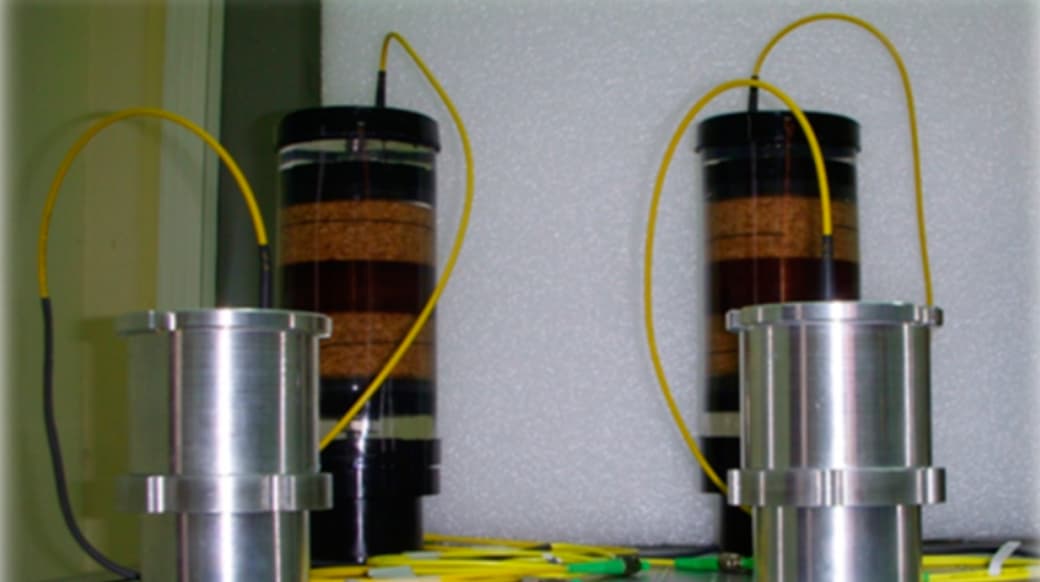
Optical fiber hydrophone system is a complex sensing system, which mainly uses optical fiber sensing technology to realize the conversion, transmission and processing of underwater sound signals. As the core part of the system, the implementation process are crucial to the performance of the whole system. The components of optical fiber hydrophone mainly include wet end and dry end. The wet end, as the sensing end, consists of the optical fiber hydrophone sensor probe and the transmission optical cable used to transmit the optical signal. The sensor probe is the core component of fiber-optic hydrophones, which can receive underwater sound signals and convert them into optical signals. The dry end mainly includes the light source of optical fiber hydrophone, optical passive device, photoelectric conversion module and signal demodulation processing module. The light source is responsible for providing stable optical signals. The optical passive device is used to control the transmission and modulation of the optical signal. The photoelectric conversion module converts the received optical signal into an electrical signal, and the signal demodulation processing module demodulates and processes the electrical signals to extract useful sound information. Main components of the fiber-optic hydrophone: a) sensor prob: Optical fiber: a core element in the sensor probe that transforms acoustic signals into optical signals. The materials, diameter, length and other parameters of the optical fiber are carefully designed to optimize its sensing performance. Sensing diaphragm: usually located at the end of the fiber and is very sensitive to underwater sound pressure signals. When the sound wave acts on the diaphragm, it will produce deformation, and then cause the change of the phase, intensity and other parameters of the light in the optical fiber. Seal construction: Ensure that the sensor resists water shock and corrosion under water while keeping the interior dry and stable. b) illuminant: Laser: produce stable, high quality beam for propagation in fiber. The type of laser and the choice of output power directly affect the sensitivity and dynamic range of the fiber hydrophone. Drive circuit: Provide a stable current and voltage for the laser to ensure its stable operation for a long time. C) Optical passive devices: Coupler: it is used to effectively couple the light generated by the light source to the optical fiber, while realizing the distribution and combination of optical signals. Wave division multiplexer: used to transmit multiple wavelengths in a single fiber to improve the transmission capacity of the fiber. Filter: used to filter noise and stray light and improve signal to noise ratio. And d) the photoelectric conversion module: Photodetector: to convert the received optical signal into electrical signals. The response speed and sensitivity of photodetectors directly affect the performance of the system. Preamplifier: to amplify the weak electrical signal output by the photodetector to facilitate subsequent signal processing. E) Signal demodulation processing module: Demodulation circuit: according to the specific demodulation algorithm, the signal output by the photoelectric conversion module is demodulated to restore the original sound signal. Data acquisition and processing unit: digitize, store and analyze the demodulated signal to extract useful sound information. Fiber-optic hydrophones may also include some auxiliary components, such as temperature sensors, pressure sensors, etc., which are used to monitor and compensate for the impact of environmental conditions on system performance. The design and manufacture of these components requires a high degree of precision and reliability to ensure that fiber optic hydrophones work stably and long term in harsh underwater environments. At the same time, with the continuous development of optical fiber sensing technology, the performance of these components is also constantly improving, providing strong technical support for optical fiber hydrophones in a wider range of application fields. In the preparation process, optical fiber and metal filament and other components are accurately processed and assembled according to the specific process requirements to form optical fiber hydrophones with specific structure and performance. The installation process of fiber-optic hydrophones is a relatively complex and requires a highly specialized operation. Fiber-optic hydrophones need to be deployed in suitable locations underwater according to specific application scenarios and requirements to ensure that they can effectively receive and process sound signals. Some key issues also need to be considered in practical application, such as the stability, sensitivity and anti-interference ability of the system. In order to improve the performance of the system, some advanced technical means can be adopted, such as optimizing the structure design of the optical fiber hydrophone, improving the stability and output power of the light source, and improving the signal demodulation algorithm. Fiber-optic hydrophones have excellent stability. The optical fiber materials used have extremely high intrinsic safety and reliability. This characteristic makes the fiber optic hydrophone to maintain stable performance for a long time and is not easy to fail. In addition, the fiber optic hydrophone also has good system stability and can maintain normal operation in a variety of harsh environments. The sensitivity of the fiber-optic hydrophones is extremely high. Its sensor probe is very sensitive to underwater sound pressure signals, and even small sound changes can be accurately captured and converted into light signals. This high sensitivity allows fiber optic hydrolisteners to capture weak sound signals in the underwater environment, enabling accurate detection and identification of underwater targets. At the same time, the fiber optic hydrophone also has the characteristics of good array sensitivity consistency, to ensure the accuracy and consistency of each channel signal. Fiber-optic hydrophone has a powerful anti-interference capability. Because its signal sensing and transmission are both light as the carrier, the electromagnetic interference below a few hundred MHz has very little effect on it. This means that fiber optic hydrophones can work properly in complex underwater environments without being affected by electromagnetic interference. In addition, the fiber optic hydrophone also has the characteristics of corrosion resistance, high temperature resistance, and can maintain stable performance in a variety of harsh environments. In general, the fiber optic hydrophone system is a highly integrated and intelligent system, and the composition and implementation process of its components are of great significance for achieving efficient and accurate underwater sound signal detection and processing. With the continuous development and progress of optical fiber sensing technology, the application prospect of fiber optic hydrophone system in ocean exploration and underwater communication will be broader.
Read MoreMachine vision is a kind of technology that uses computers and cameras to imitate the human vision system for image analysis and processing. It combines knowledge in the fields of computer science, image processing, pattern recognition, and artificial intelligence to enable machines to "see" and understand images, providing an important basis for automation and intelligence in the real world. The primary goal of machine vision is to enable computers to understand and analyze images as humans do. The image data obtained through the camera can be processed and interpreted in the computer, so as to realize automatic control, quality detection, object recognition, object tracking and other functions. It can be widely used in industrial automation, intelligent monitoring, medical diagnosis, traffic management and other fields. The core technologies of machine vision include image acquisition, image pre-processing, feature extraction, target detection and recognition, etc. First, machine vision needs to obtain the image through devices such as cameras, and then pre-process the image, including denoising, enhancement, geometric correction, etc., to eliminate interference and noise in the image. Next, machine vision will use the image processing and pattern recognition algorithm to extract the feature information in the image. These feature information can be the edge, texture, color, etc. Through the analysis of these features, the detection, classification and recognition of goals can be realized. Object detection and recognition is one of the important tasks of machine vision. By training models and using machine learning algorithms, machine vision can identify and locate target objects in the image, such as faces, vehicles, product defects, and so on. This provides very valuable applications for automated production, intelligent security and intelligent transportation. In addition, machine vision can also perform image analysis and understanding. Through the semantic segmentation, object tracking and other technologies, the understanding and interpretation of different regions and objects in the image can be realized, and then provide the basis for decision-making and control. The development of machine vision technology benefits from the improvement of computer computing power, the improvement of sensor technology and the development of artificial intelligence technology such as deep learning. These advances have led to significant improvements in accuracy, real-time, and adaptability. Although machine vision has achieved remarkable application results in many fields, there are still some challenges and problems. For example, complex scenes, lighting changes, occlusion and other factors may affect the performance of the machine vision system. Therefore, researchers and engineers need to continuously improve algorithms and technologies to improve the robustness and performance of machine vision systems. In short, machine vision, as an important technology, is constantly changing the way we live and work. It combines technologies such as image processing, pattern recognition and artificial intelligence to allow machines to "see" and understand images like people. With the further development of technology, machine vision will play an important role in more fields, creating a more intelligent, convenient and efficient living environment for human beings.
Read More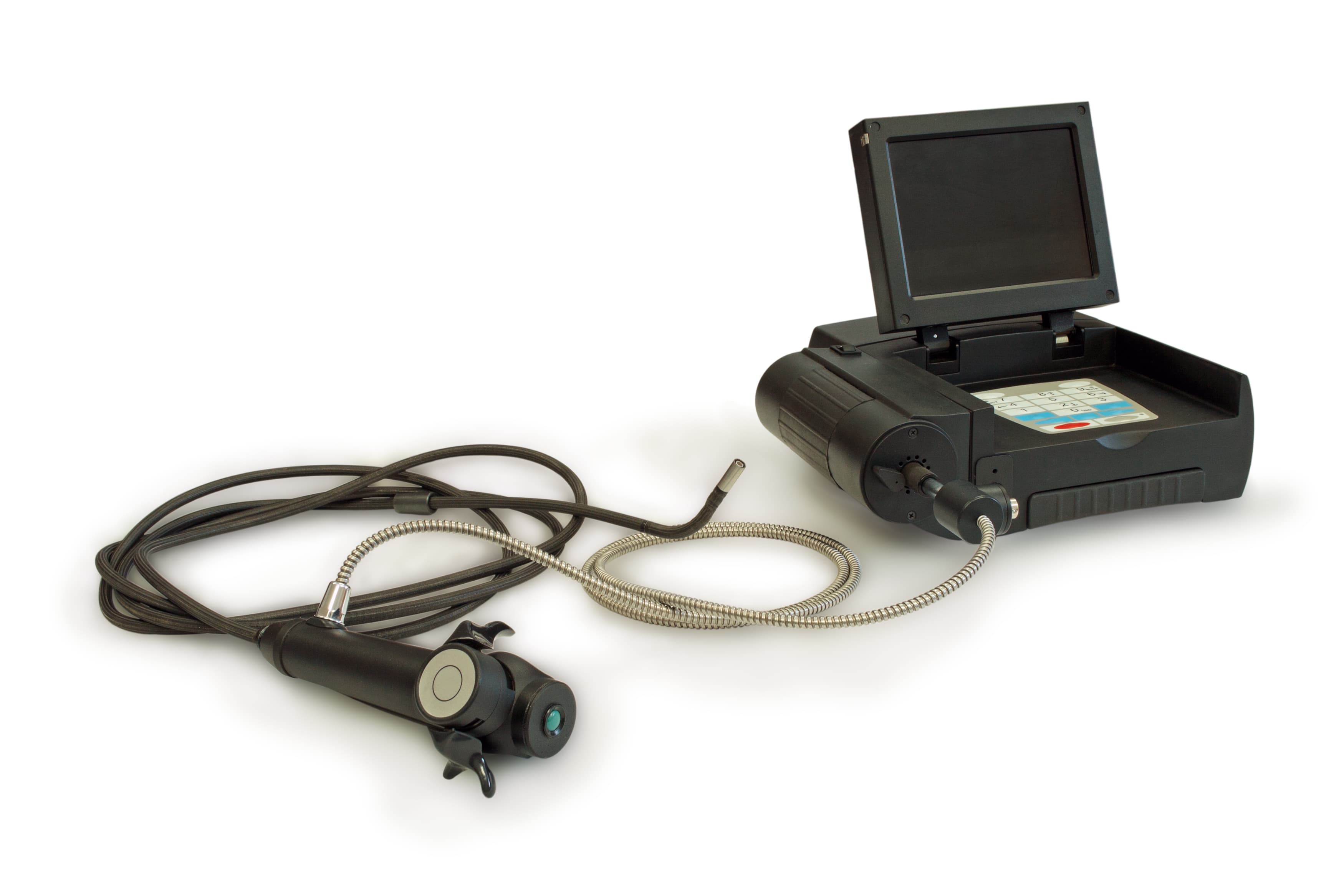
Industrial optical fiber endoscope is a kind of remote visual inspection equipment, with fine diameter, flexible characteristics, mostly used for some narrow curved test piece internal inspection, such as: turbine, small diameter process pipeline, aircraft fuselage, boiler pipeline maintenance, easy to use, is widely used. Understanding the imaging principles of industrial fiber optic endoscope can help to buy good products. Industrial fiber optic endoscopes often consof the objective lens, the mirror tube, the control unit, and the eyepiece. The guide beam providing lighting and the guide fiber optic beam responsible for transmission are all running through the mirror tube. The imaging core of optical fiber mirror lies in the optical fiber beam, and its imaging principle can be understood from the perspective of local single optical fiber and overall optical beam. The imaging principle of industrial fiber optic endoscopy is based on a combination of optical and fiber optic technology, which allows the transmission of images through optical fibers, enabling visual detection in environments that are difficult to observe directly. This technology is widely used in aviation, automobile, electric power, chemical industry and other fields, providing a convenient and efficient means for the internal detection and maintenance of industrial equipment. First, let's take a look at the basic structure and characteristics of the optical fiber. The optical fiber consists of three parts: fiber core, cladding and coating. The core is the core part of the optical fiber that transmits the optical signal; the cladding protects the optical signal and prevents its leakage; the coating is the outermost protective layer, increasing the durability and flexibility of the fiber. The characteristics of optical fiber include low loss, high bandwidth, and strong anti-interference ability, which makes optical fiber an ideal choice for long-distance, high-speed, and large-capacity data transmission. In industrial optical fiber endoscopes, optical fibers are used to transmit light signals reflected back from the inside of the device. The probe portion of the endoscope is usually equipped with one or more fiber beams that introduce light signals from the external light source into the device and collect light signals reflected back from the inside of the device. These optical signals are transmitted to the viewing end through the fiber beam, which is then converted into a visual image through the imaging system. At the core of the imaging system is the image sensor, which converts the received optical signal into an electrical signal, which is then processed through an electronic amplifier and finally output to the display. Depending on the type of sensor, the imaging system can be divided into two types: a charge-coupled device (CCD) sensor, and the other is a complementary metal oxide semiconductor (CMOS) sensor. Both sensors have advantages and disadvantages, but both achieve high-quality image output. In addition to the imaging system, industrial fiber-optic endoscopes require an optical system to focus and adjust the light. The optical system includes components such as an objective, an eyepiece and a focusing mechanism, which together ensure that the light can be accurately focused on the sensor to obtain a clear, accurate image. In practical application, industrial optical fiber optic endoscope also needs to consider the influence of environmental factors. For example, the imaging quality of an endoscope may be affected in harsh environments such as high temperature, high humidity, and strong electromagnetic interference. Therefore, the design needs to take the corresponding protective measures, such as the use of high temperature, moisture, anti-interference optical fiber and sensors, to ensure that the endoscope can work normally in various environments. In addition, the industrial fiber-optic endoscope also needs to consider the problem of image processing. Because the transmission process may be affected by noise, distortion and other factors, it is necessary to pre-processing, enhancement and recovery of the received images to improve the clarity and contrast of the image. These image processing technologies include filtering, denoising, enhancement, segmentation, which can help us to better identify and analyze the information in the image. In conclusion, the imaging principle of industrial fiber optic endoscope is based on the combination of optical and fiber optic technology, through which images are transmitted through optical fibers and processed by the imaging system to obtain visual images. In practical applications, the influence of environmental factors and the problem of image processing are considered to ensure that the endoscope works properly and output high-quality images. With the continuous development of technology, industrial fiber optic endoscope will be applied and promoted in more fields.
Read More
Dear customers and all staff, As the year 2024 approaches, in accordance with the national holiday regulations and taking into consideration the company's situation, after thorough discussion, the holiday schedule is as follows: A holiday will be observed from Tuesday, February 6th, 2024, to Sunday, February 18th, 2024, a total of 13 days. Work will resume on Sunday, February 4th, 2024, and Monday, February 19th, 2024. We would like to take this opportunity to wish all our valuable customers and employees a happy holiday and good health. Hecho Technology Co., Ltd., Nanjing Thursday, February 1th, 2024
Read MoreDear customers and all staff, As New Year's Day in 2024 approaches, in accordance with national holiday regulations and considering the company's situation, after careful consideration, the holiday arrangements are as follows: The company will be closed from 30th, 2023 (Saturday) to January 1st, 2024 (Monday), for total of 3 days. Normal working hours will resume on January 2nd, 2024 (Tuesday). We would like to take this opportunity to wish our valued customers and all staff a happy holiday and good health! Nanjing Hecho Technology Co., Ltd. December 28th, 2023, Thursday.
Read MoreFiber lasers doped with erbium are widely used in cosmetic surgery, where their laser beams can deliver energy in a fractional pattern to stimulate collagen and elastin fibers, promoting skin self-repair and reconstruction. These lasers offer advantages of high efficiency, safety, versatility, and fast recovery, providing patients with an effective treatment option for improving various skin issues. The working principle involves emitting small laser beams through optical fibers onto the skin, creating multiple tiny thermal injury zones. This stimulates the skin's self-repair mechanism, promoting collagen regeneration and achieving skin rejuvenation and beautification effects. Nanjing Hecho Technology specializes in the research and development of medical laser fibers, with related products extending into the field of medical aesthetics. They cater to various lasers such as thulium, holmium, and erbium lasers, showcasing their capabilities in various applications.
Read More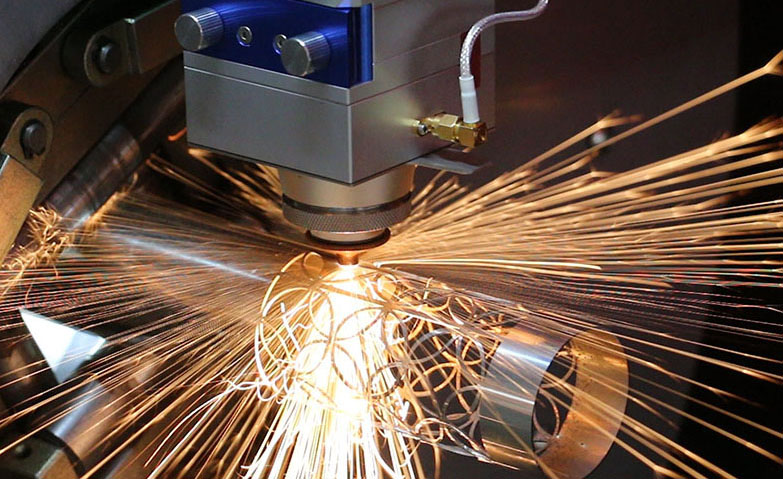
In recent years, in fields such as heavy machinery, shipbuilding, and large steel structures, a large number of parts require thick plate cutting. These parts have various specifications and shapes, some of which require high precision. Traditional processing methods like flame cutting and plasma cutting suffer from low processing efficiency, poor accuracy, and significant material waste, which cannot meet the current manufacturing requirements. The emergence of ultra-high-power kilowatt-level fiber laser cutting provides the most effective solution to address the problems in thick plate cutting. The thicker the metal material, the higher the laser cutting power required. When cutting thin plates, higher laser power leads to faster cutting speeds, thereby achieving higher processing efficiency. High-power laser cutting offers four advantages: faster cutting speed, stronger cutting capability, lower operating costs, and broader application range. It finds extensive applications in metal processing, electronics manufacturing, plastic processing, precision instrument manufacturing, and other fields. Domestically, there has been rapid development in high-power fiber lasers. Hecho Technology has been committed to the development and manufacturing of various fiber optics, providing customers with customized high-temperature-resistant, high-power transmission fiber products. As the demand for processing quality continues to rise, the application of high-power fiber lasers in the industrial sector will become increasingly widespread. Hecho Technology will continue to innovate and promote the widespread and in-depth application of laser technology.
Read More
Machine vision fibers refer to the fiber optic components and technologies used in machine vision systems. They play an important role in machine vision applications and have several common application scenarios: Fiber optic illumination: Machine vision systems often require high-brightness and uniform light sources to provide illumination conditions. Fibers can be used to transmit light from the light source, allowing it to be placed in the desired location and delivered to specific areas through fiber bundles, thus providing consistent illumination. Fiber optic sensors: Fiber optic sensors can be used to detect and measure various physical quantities in machine vision systems. For example, fiber optic displacement sensors can measure object displacement or deformation, and fiber optic temperature sensors can measure object temperature, providing accurate input data for machine vision systems. Fiber bundles: Fiber bundles can concentrate and distribute light from fiber optic light sources to adapt to specific requirements of machine vision applications. Fiber bundles can be used to focus light from the fiber optic light source to a specific area or disperse light to a larger area, meeting the demands of illumination uniformity and brightness control. Fiber optic light guides: Fiber optic light guides are ring-shaped fiber optic structures that transmit light from one point to another, enabling light path transmission and image acquisition in machine vision systems. Fiber optic light guides can be used to construct high-speed, high-resolution image transmission systems for medical imaging, robot vision, industrial inspection, and other fields. Machine vision fibers have a wide range of applications, including illumination, sensing, light path transmission, and image acquisition. The high flexibility, reliability, and high-temperature resistance of fiber optic technology make it widely used in the field of machine vision. Nanjing Hecho Technology provides reliable optical transmission solutions for machine vision systems. Companies in relevant industries are welcome to inquire.
Read More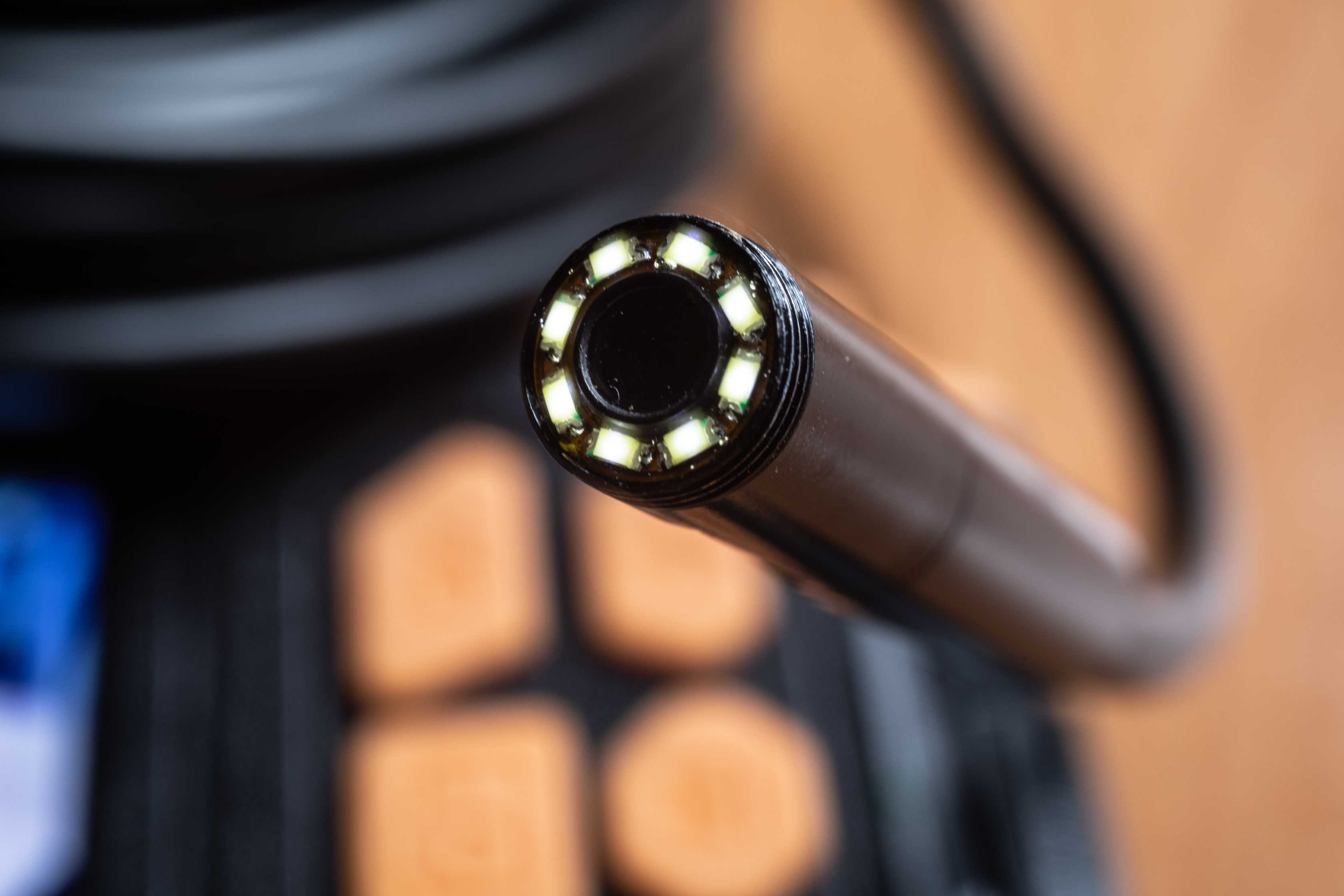
Here are some common applications of optical fiber in the field of medical diagnostics: Fiber Optic Endoscopy: Fiber optic endoscopes are devices that integrate optical fibers for visual observation and examination of internal organs and tissues. High-intensity light transmitted through the optical fibers provides clear images, enabling accurate medical diagnosis. Fiber Optic Biosensors: Optical fibers can be used as biosensors to detect and monitor chemical components, biomarkers, or pathological changes within the human body. Fiber optic sensors utilize light scattering, absorption, or changes in light propagation characteristics to detect target substances, enabling early diagnosis and disease monitoring. Laser Therapy: Fiber optic lasers can be employed in medical treatments such as laser surgery, laser therapy, and photodynamic therapy. Laser light transmitted through optical fibers is directed to specific areas of the patient's body, achieving objectives like cutting, coagulation, vaporization, or irradiation of targeted tissues. Fiber Optic Spectroscopy: Spectroscopy is a technique used for analysis and diagnostics, and optical fibers can facilitate non-invasive spectroscopic measurements. By connecting optical fibers to spectrometers or microscopes, spectral information of samples can be obtained, allowing identification of substance composition, concentration, or tissue characteristics. Fiber Optic Imaging: Optical fibers find applications in medical imaging devices such as optical coherence tomography (OCT) and fiber optic microscopy. These technologies utilize fiber optic transmission and detection of light to generate high-resolution tissue images for disease diagnosis and research purposes. The applications of optical fiber in medical diagnostics not only provide more accurate and convenient diagnostic tools but also enable non-invasive and minimally invasive treatments, thereby significantly advancing and innovating the field of medicine.
Read More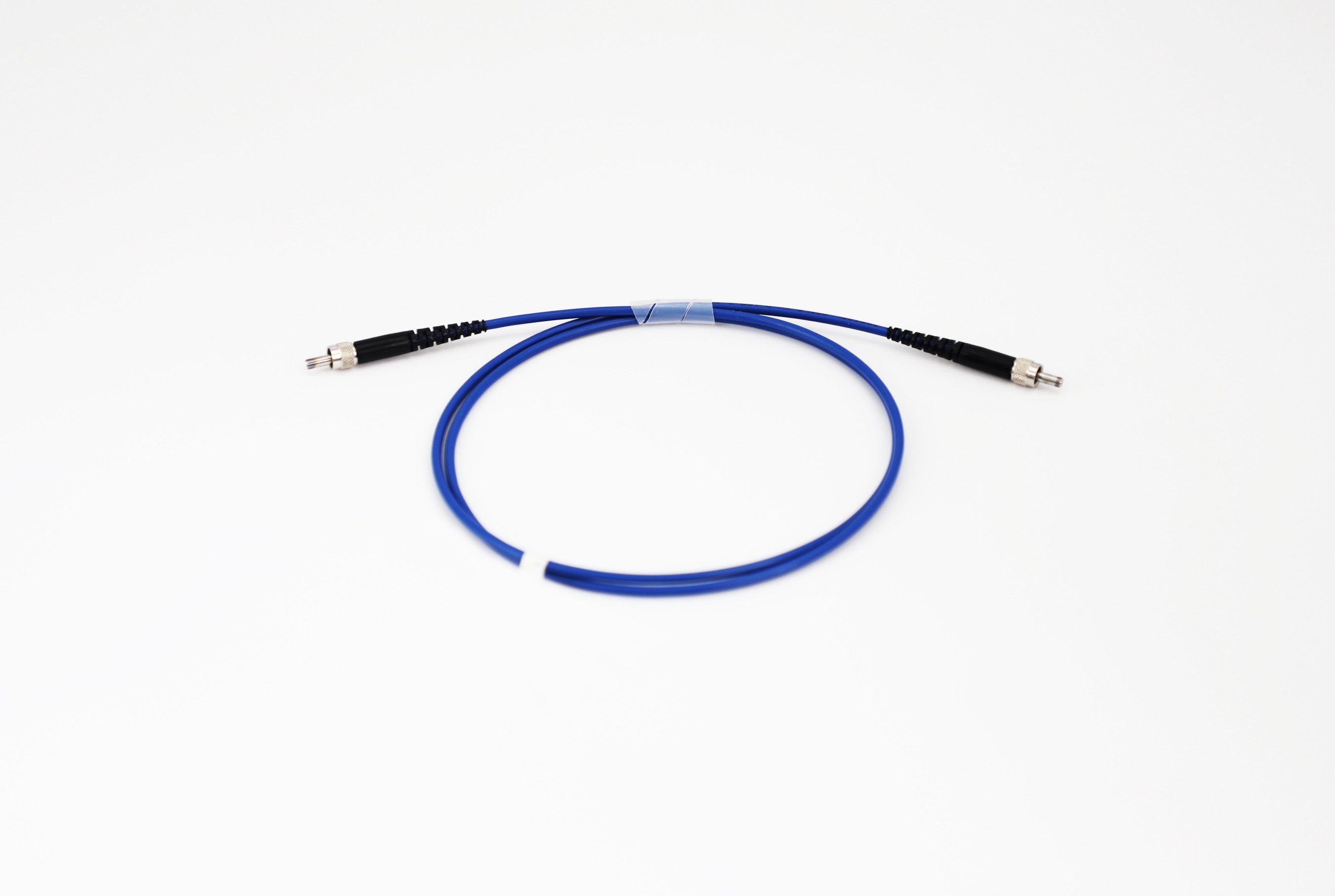
High-temperature fiber optic cables are specially designed and manufactured optical fibers that exhibit excellent resistance to high temperatures. Conventional optical fibers may suffer damage or performance degradation in high-temperature environments, whereas high-temperature fiber optic cables can maintain good operational stability under extreme temperature conditions. High-temperature fiber optic cables are typically made with materials that have high melting points and low thermal expansion coefficients, such as high-silica materials or special coatings (such as polyimide coatings). These materials help preserve the structural integrity and transmission performance of the fiber optic cables at high temperatures. High-temperature fiber optic cables find wide applications, particularly in industrial, military, and research settings operating in high-temperature environments. For instance, they can be used for sensing, optical signal transmission, and laser connections in high-temperature furnaces, thermal power plants, aerospace applications, and more. The special design and manufacturing of Hecho high-temperature fiber optic cables enable them to deliver reliable performance in extreme temperature environments, providing crucial solutions for high-temperature application scenarios.
Read More


 IPv6 network supported
 English
 简体中文
简体中文